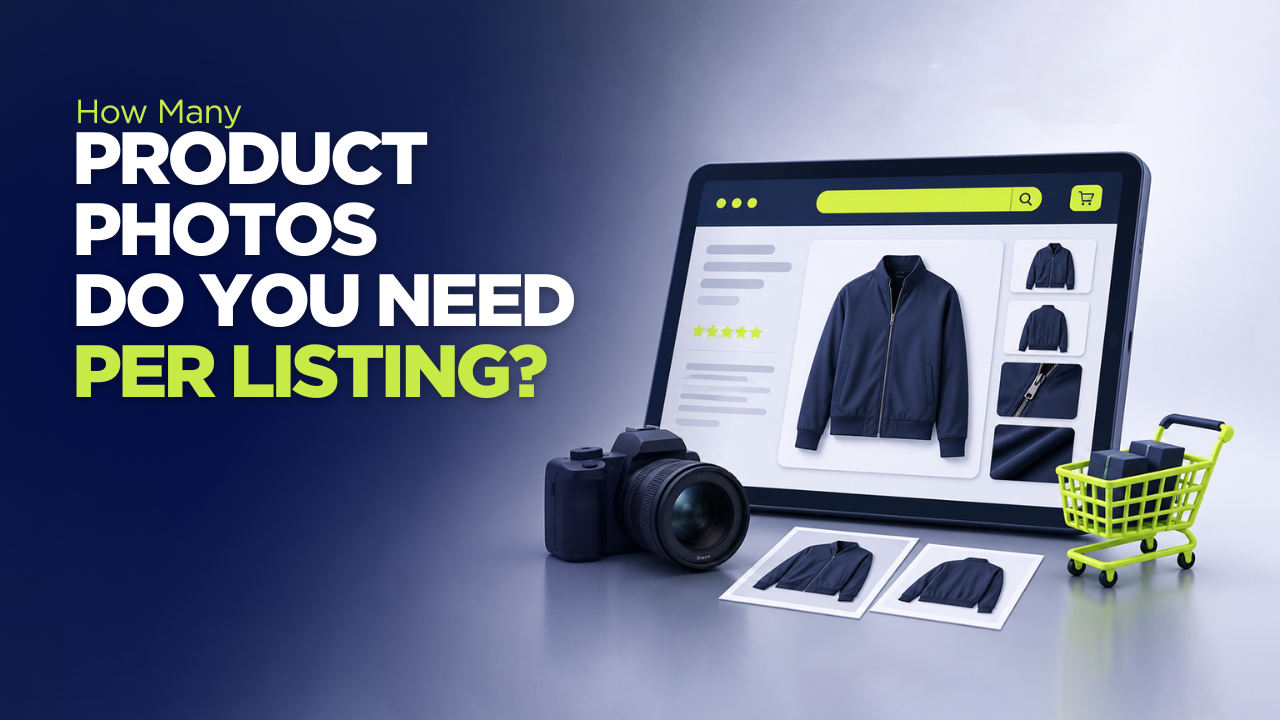
How Many Product Photos Do You Need Per Listing?
For most products, aim for five to eight images per listing. That covers the main shot, a few angles, a detail close up, a sense of scale, and the product in use. Marketplaces set their own minimums, but shoppers almost always reward more, as long as every image is clean and useful. Here is the breakdown by marketplace and by product type.

The short answer
Five to eight images works for most products. Simple items can do well with four or five. Apparel, jewelry, and anything with detail or variants usually needs more, sometimes eight to ten. The rule is not a fixed number, it is covering every question a shopper would ask before buying.
Marketplace minimums and recommendations
Each platform has its own rules for the main image and how many you can add.
| Marketplace | Minimum | Recommended | Main image rule |
|---|---|---|---|
| Amazon | 1 | 6 to 9 | Pure white background, product fills most of frame |
| Shopify | 1 | 5 to 8 | Consistent size and background across the store |
| Etsy | 1 | 5 to 10 | First image is the thumbnail, make it clear |
| eBay | 1 | 6 to 12 | Clean background, no added text or borders |
| Walmart | 1 | 4 to 8 | White background on the main, extras show detail |
The shots every listing needs
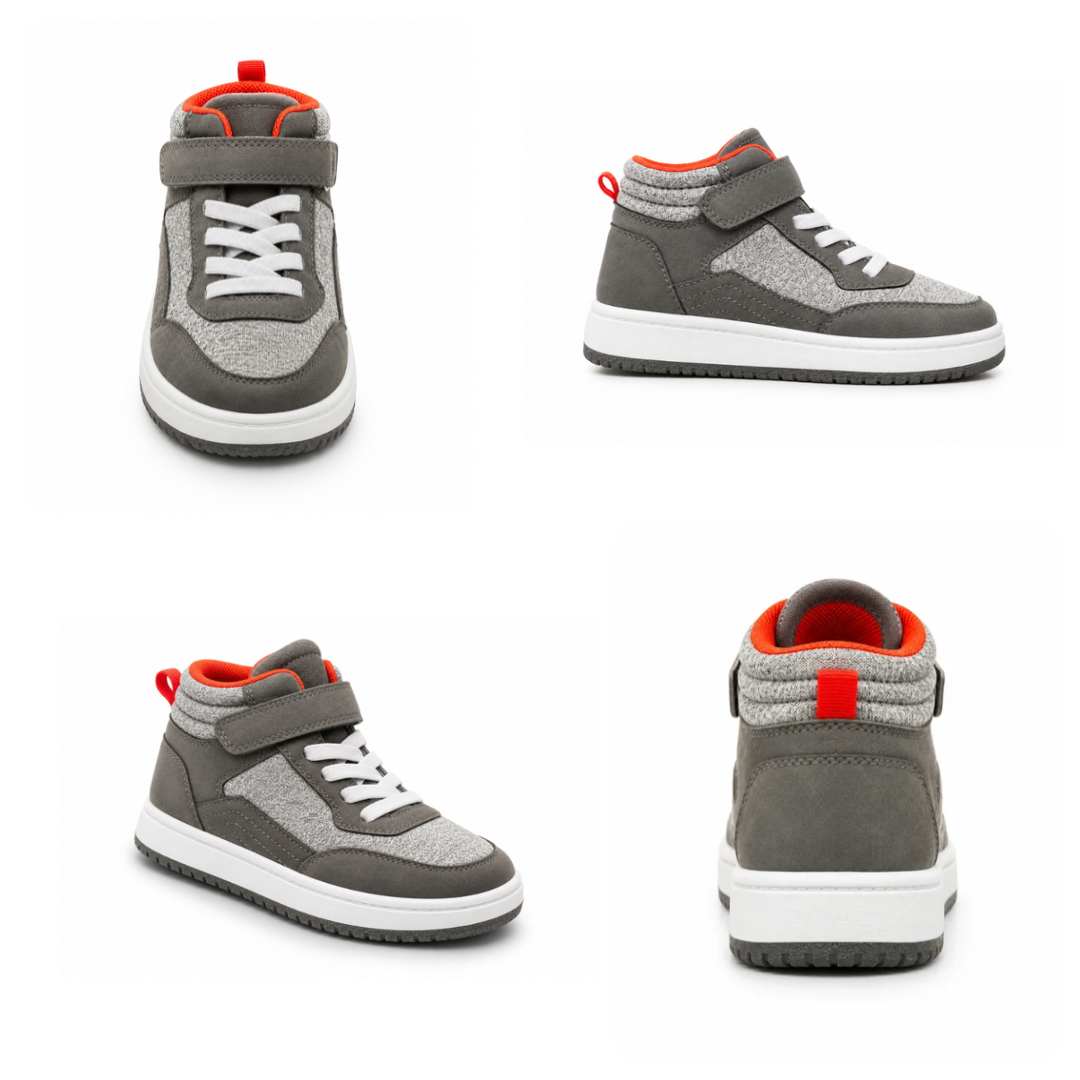
Whatever the count, a strong listing usually includes the same core set.
- A clean main image on white, product filling the frame.
- Two or three angles so the shape is clear.
- A close up of texture, material, or finish.
- A scale or in use shot so size and context are obvious.
- Packaging or what is included, where it matters.
By product type

Apparel needs front, back, detail, and ideally on a model or ghost mannequin, so it runs higher. Jewelry needs macro detail and a worn shot for scale. Electronics need ports, controls, and what is in the box. Furniture needs scale and room context. Food and beauty need ingredients or texture up close. Match the count to what the buyer needs to see, not to a target number.
Quality beats quantity

More images only help if each one is clean, correctly edited, and consistent with the rest. Eight sloppy, mismatched photos hurt a listing more than five clean ones. Get the core set right, edited to the same standard and the marketplace spec, before adding extras.
Frequently asked questions
How many photos should an Amazon listing have? Amazon allows several and recommends using them. Six to nine clean images, led by a pure white background main shot, works well for most products.
How many angles do I need? At least two or three beyond the main shot, enough to show the full shape, plus a detail close-up and a scale or in-use image.
Do more product photos increase sales? Usually yes, up to a point, as long as each image is clean and adds information. Quality and consistency matter more than raw count.
What makes a good main image? A sharp, well-lit product on a clean white background, filling most of the frame, with no text or logos. It is the first thing shoppers judge.
How to plan your shot list

Before the shoot, write the shots down. Start with the main white background image, then list the angles, the detail close-ups, a scale or in-use frame, and anything specific to the product like a size tag or a port. Planning the list first means you capture everything in one session and do not go back for a missing angle later, which is where time and money leak.
Listing photo mistakes that cost sales
- A weak or cluttered main image, which is the one shoppers judge first.
- Mismatched backgrounds and sizes across the set, which looks careless.
- Missing a scale or in use shot, so buyers cannot picture the real size.
- Filler images that repeat the same angle without adding information.
Order and name your images well
Sequence matters as much as count. Lead with the strongest main image, then angles, then detail, then the scale or in use shot, so the story builds as a shopper swipes. Name the files clearly with the product and a short description rather than a camera code, and give each image real alt text. It helps search and accessibility, and it is a small step that many listings skip.

Written by
Mirza Amirul Islam