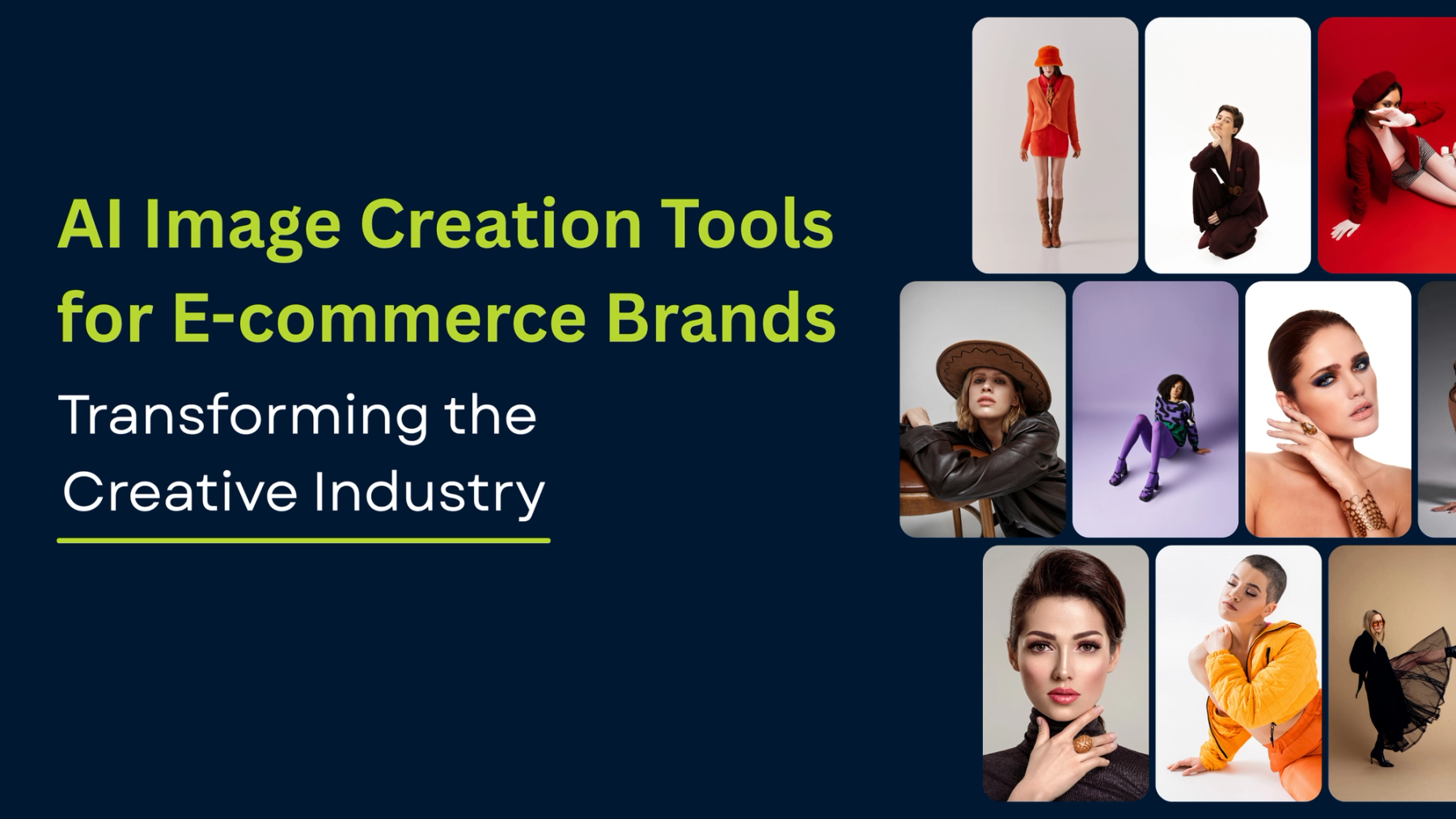
AI Image Creation Tools for E-commerce Brands : Transforming the Creative Industry
Artificial Intelligence has completely changed how visual content is made. What once needed design teams, long hours, and expensive equipment can now be done in minutes—with just a text prompt and the right tool. For designers, marketers, and creative agencies, knowing which AI tools actually deliver professional-level results is key.

AI-Powered Tools for the Modern E-Commerce Workflow
Not all AI is built the same, the key is choosing the right tools for the right stage of the creative process.
The modern creative process begins where strategy meets imagination. Ideation & Strategy lays the foundation for a successful campaign. Using advanced language models like ChatGPT and Claude creative teams can turn complex client “vibes” into clear, actionable production notes, while Gemini helps explore fresh and unconventional creative directions. To keep ideas grounded in reality, Perplexity AI adds competitive intelligence by validating concepts through real-time market trends and audience insights before any visuals are created.
Once the strategy is clear, the workflow moves into Concepting and Mood. This is where abstract ideas become visual. For cinematic and high-impact aesthetics, Midjourney helps designers explore rich lighting, style, and mood, while DALL-E3 offers the precision needed for accurate layouts and typography-based storyboards. This visual blueprint keeps all stakeholders aligned before production begins.
The move into Visual Production requires strong organization and technical control. Notion AI acts as the digital architect, turning raw meeting notes into structured shot lists, timelines, and workflows. At the same time, Leonardo.ai creates style-consistent assets aligned with brand guidelines, while Krea.ai enhances low-resolution files into professional-grade materials. Topaz Labs This process removes much of the chaos often found in high-volume content creation.
The final and most critical phase is Post-Production and Retouching, the core specialty of bZm Graphics AI tools like Photoshoot AI and are used for distraction removal, denoising, and sharpening—but they are only part of the process. Our workflow is built on a hybrid approach: combining the speed of AI pre-editing with the trained eye of expert human retouchers. This ensures every final asset delivers premium color accuracy, detail, and visual consistency that automation alone cannot achieve.
Ideation & Concepting: Building the Vision Before Production
Every great project starts with a messy brainstorming session. Maybe you have a vibe in mind but can't quite put it into words, or you have a rough brief that needs a bit more soul. We’ve all been there: staring at a blank screen, trying to bridge the gap between a client's vision and a final graphic. This is where AI moves from being a "tech tool" to being your ultimate brainstorming partner. Right now, we are seeing a shift in how the best campaigns are built. It’s no longer about just "doing the work"; it’s about thinking deeper before the production even begins.
ChatGPT & Claude
ChatGPT & Claude play a valuable role during the ideation and concepting stage by helping teams turn loose thoughts into clear creative direction. When ideas feel scattered or a brief lacks clarity, they can organize information, identify key themes, and shape rough concepts into something more structured.
They are especially useful for developing campaign angles, refining brand messaging, exploring different creative directions, and translating vague client feedback into actionable ideas. Instead of starting from a blank page, teams can use them to generate momentum quickly and test multiple concepts before production begins.
For agencies, marketers, and e-commerce brands, this early-stage support saves time, improves alignment, and helps build a stronger vision before design or production work starts.
Perplexity AI
Perplexity AI is highly useful during the ideation and concepting stage because strong creative ideas need real-world context. Before production begins, teams often need to understand trends, audience behavior, competitors, and market demand—and Perplexity AI helps uncover that quickly.Instead of spending hours researching across different sources, it allows teams to gather fast, reliable insights, validate campaign ideas, and explore what is working in the market. This helps shape concepts that are both creative and strategically relevant.
For marketers, agencies, and e-commerce brands, Perplexity AI connects creativity with data, making it easier to build smarter ideas before production starts.
Gemini
Gemini is highly effective during the ideation and concepting stage because it helps expand early ideas and uncover fresh creative directions. When a concept feels unclear or limited, it can generate new angles, stronger campaign themes, and alternative messaging ideas.
It works well for brainstorming campaign themes, exploring audience-focused messaging, suggesting new directions, and strengthening early ideas. Teams can use Gemini to test variations, uncover fresh perspectives, and push creative thinking further.
For marketers, agencies, and e-commerce brands, Gemini adds speed and flexibility to the creative process, helping shape a clearer and more confident vision before production begins.
Concepting & Mood Boards
Once the strategy is set and the "Big Idea" is clear, it’s time for the most exciting part: making it visible.
A few years ago, this meant spending hours scrolling through Pinterest or stock photo sites, searching for an image that almost matched your idea. Today, that process has changed—you can simply describe your vision to AI tools and watch it come to life in real time.This is exactly where tools like Midjourney and DALL-E3 earn their reputation. They aren't just "generators"; they are your digital sketchbooks.
Midjourney
For concepting and mood boards, Midjourney helps turn rough ideas into clear visual directions. Instead of spending hours searching for inspiration, teams can use simple prompts to create styles, color moods, lighting, and campaign looks in minutes. It makes abstract ideas easier to see and share.For designers and e-commerce brands, this means faster collaboration and quicker decisions. Midjourney helps explore different creative directions, align ideas early, and move into production with more clarity.
DALL-E3
While Midjourney is great for creating the overall vibe, DALL-E3 stands out when precision matters. It follows detailed prompts closely and is especially useful for concepts that need clear layouts, readable text elements, or structured scenes. If you need to present a specific visual idea for a client pitch, it helps bring that vision to life with accuracy.
For designers and marketers, DALL-E3 is also strong for storyboarding, ad mockups, and campaign planning. When the goal is less about mood and more about showing exactly how something should look, it becomes a reliable creative tool.
VISUAL PRODUCTION: ORGANIZING THE CHAOS INTO ASSETS
Once the concept and visual direction are locked in, the real work begins: the "practical" side of production. This is where timelines, responsibilities, and technical requirements meet. If ideation is the spark, production is the engine.
To keep things moving at scale, you need tools that don't just create, but also organize and optimize.
Notion AI (The Architect)
This is where your strategy takes root. Inside your Notion AI workspace, AI can act like a production manager—turning raw meeting notes or scattered brainstorms into structured shot lists, production timelines, and creative briefs in minutes.
Instead of spending hours manually organizing databases, Notion AI helps surface next steps, streamline planning, and assign responsibilities across designers, marketers, and retouching teams.
Leonardo.ai (The Stylist)
When you need production-ready assets that must follow a very specific brand style, Leonardo.ai is a strong option. It lets you use style references so generated content doesn’t just look good—it feels aligned with your brand identity.
It’s especially useful for creating consistent textures, backgrounds, and visual elements that can seamlessly fit into a larger campaign or ongoing content system.
Krea.ai (The Enhancer)
We’ve all been there—a client sends over the perfect asset, but it’s too low-resolution to actually use. Krea.ai can be a lifesaver in these moments, offering quick upscaling and image enhancement when time is tight.
It helps restore detail and clarity to low-res visuals, making them far more usable for professional web, social, or print applications without needing to start from scratch.
Post-Production & Retouching with bZm Graphics
Instead of relying on separate tools for creation and post-production, bZm Graphics helps brands manage both through one streamlined workflow. We also have our own background removal platform Maskbg.ai , built to speed up production with clean and efficient cutouts.
We mainly focus on creative quality and visual consistency in post-production. We use AI in selected cases where it genuinely adds value to the workflow, while our specialists handle the finishing details, color accuracy, textures, and brand consistency.
Whether you need new visuals or fast editing for existing photography, bZm Graphics helps brands scale content production with quality, speed, and reliability.
Final Thoughts
AI image generation is no longer the future—it’s already here. But the brands winning in 2026 are the ones using it strategically.
If you need creative speed plus production quality, the smartest move is combining AI tools with experienced post-production support. Because in e-commerce, great visuals don’t just look good—they sell.
Written by
Mirza Amirul Islam