AI Transforming Retouching — Not Replacing It
In the fast-evolving world of visual storytelling, artificial intelligence has emerged as a powerful support in photo editing. Tasks like background removal, clipping paths, skin smoothing, and batch processing—once time-consuming—can now be done quickly and efficiently. For photographers, e-commerce brands, and creative teams handling large volumes of images, this shift makes workflows smoother and more productive. Still, no matter how advanced the tools become, great imagery continues to rely on the human touch—where creativity, judgment, and attention to detail bring each image to life.

The Strengths of AI
AI excels at speed, consistency, and repetition. Tasks like masking, object removal, and file organization—once time-consuming—can now be handled in seconds.
This frees creative professionals to focus on higher-value work like refinement and creative direction, rather than repetitive processes.
For fast-paced industries like e-commerce and commercial photography, AI acts as a force multiplier, enabling teams to scale production without compromising turnaround times.
Why Human Creativity Matters
Every great project begins with a rough idea—more instinct than clarity. You might have a strong visual direction or a loose brief that still needs depth. In this stage, AI becomes more than just a production tool; it supports the thinking process, helping to refine ideas and shape a clearer creative direction before execution begins.
Still, creativity itself remains deeply human. A skilled retoucher does more than adjust pixels—they interpret mood, guide storytelling, and make nuanced decisions around light, tone, and texture. These subtle choices are what elevate an image, ensuring it feels intentional, authentic, and aligned with its purpose.
This human intuition ensures that every edit serves the story behind the photograph, preserving authenticity while enhancing visual impact.
High-End Retouching Needs Human Skills
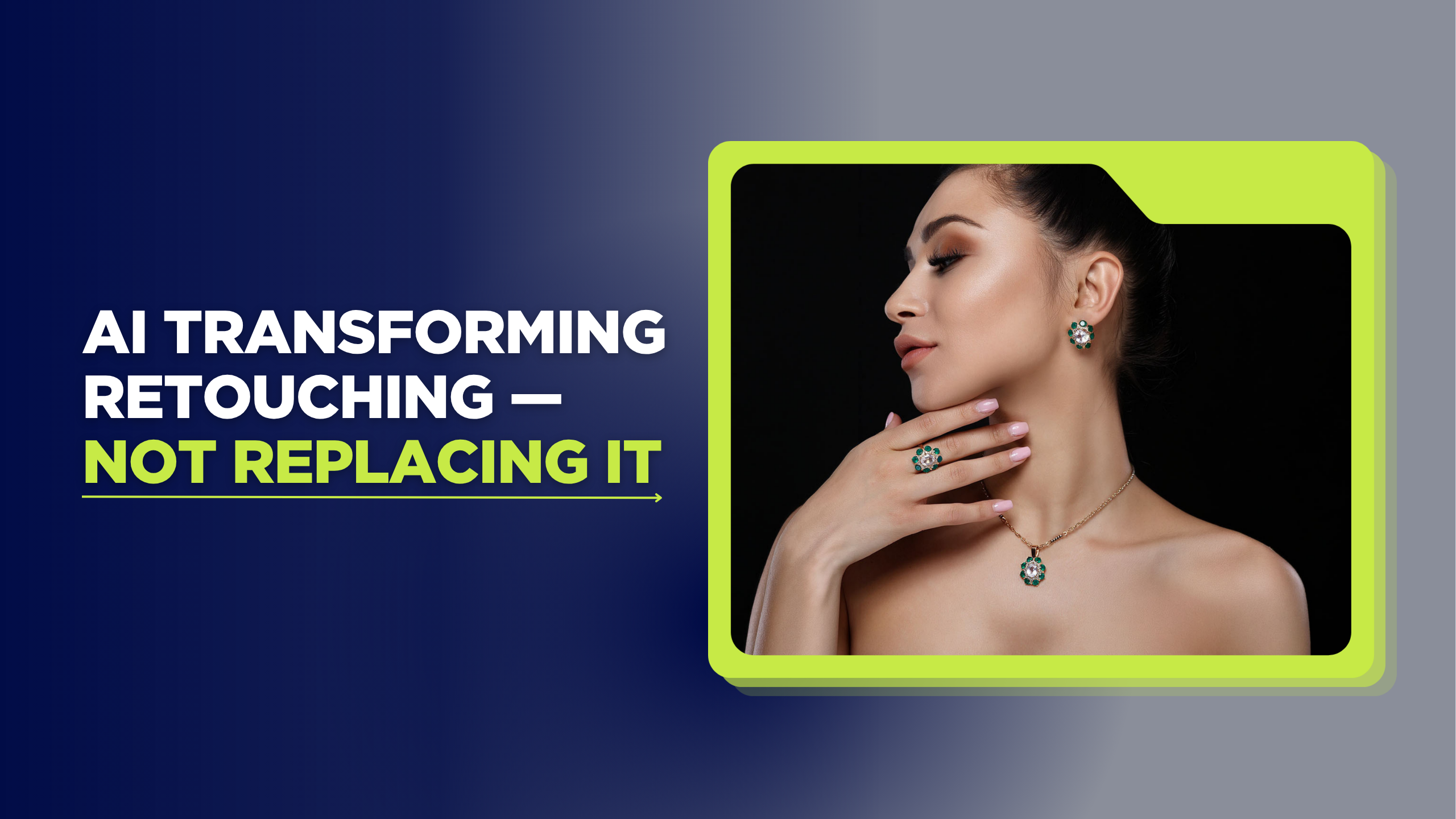
While AI is very helpful for basic editing, high-end retouching still needs human skill and experience. Creating natural-looking skin retouching, enhancing small product details, and keeping colors consistent across a full campaign requires careful attention.
Editors also need to balance shadows and light so the image looks realistic and polished. Most importantly, every brand has its own visual style, and maintaining that brand consistency is something human retouchers understand best.
AI can assist the process, but the final quality and creative decisions still depend on skilled human retouchers.

This image shows the level of care and detail that high-end retouching requires. The skin looks smooth yet natural, the lighting feels balanced, and the bold red tones are clean and consistent. Small refinements in texture and shadows add depth without making it look over-edited. It’s a great example of how human touch makes an image feel polished and real.
Why Brands Still Work With Professional Retouching Teams
In commercial photography, consistency and quality are non-negotiable. Every image—whether used on a website, in a catalog, or across a global campaign—must align seamlessly with a brand’s visual identity, reinforcing a sense of professionalism and trust.
This level of precision is why brands rely on professional post-production teams. Beyond maintaining uniform standards across large volumes of work, they understand how to adapt each image to a brand’s unique style while preserving consistency at scale.
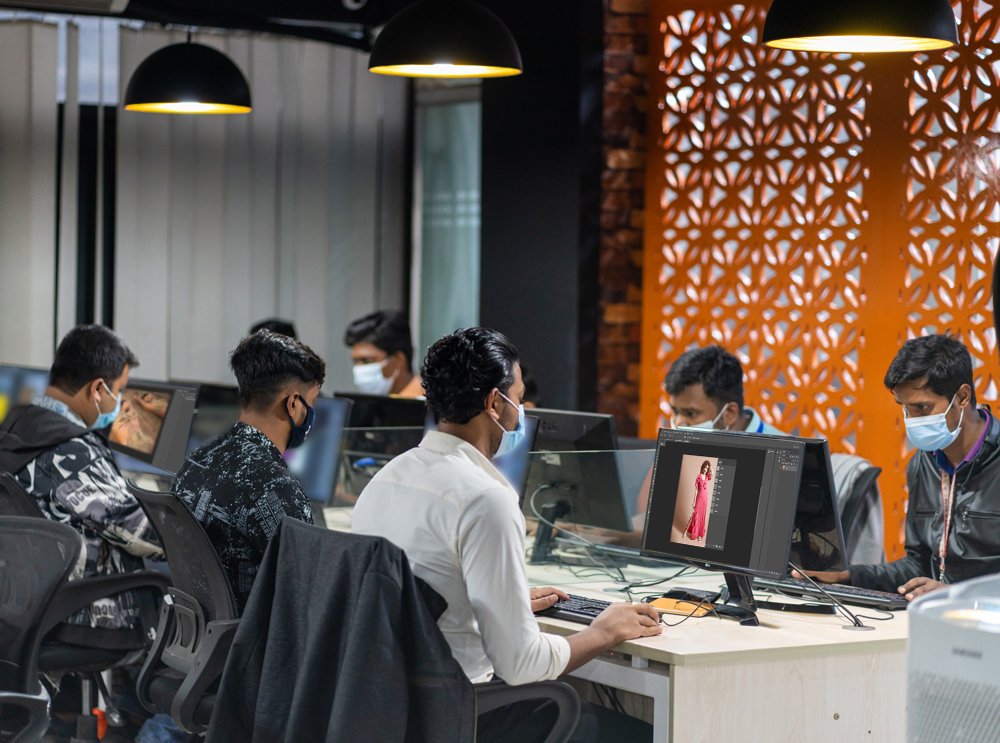
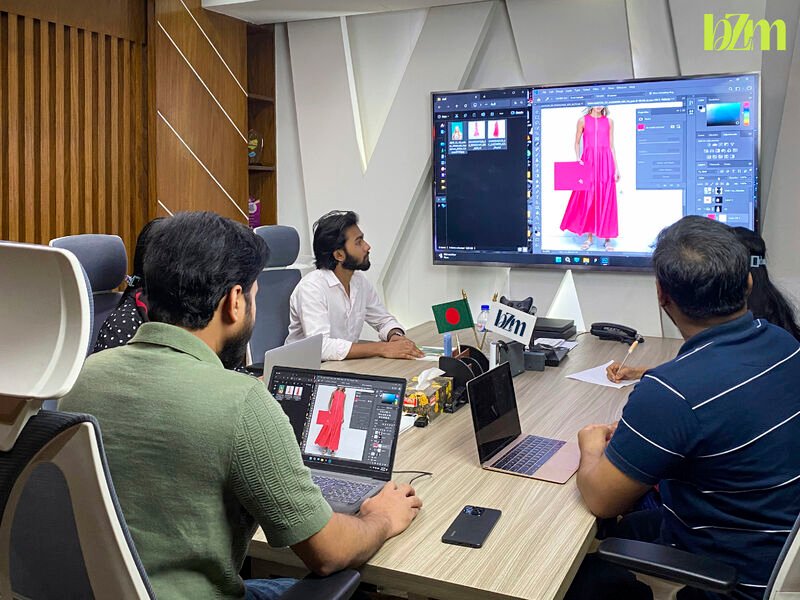
At bZm Graphics, we bring this balance to life by combining advanced AI tools with the expertise of skilled retouchers. The result is a refined workflow that delivers both efficiency and high-end quality—ensuring every image meets the expectations modern brands demand.
The Current Limits of AI
AI is powerful, but it still has its limits. Sometimes it over-smooths images, making skin look plastic or unnatural. A skilled retoucher knows how to keep natural texture and the small details that make an image feel real. AI can also apply edits like changing colors or contrast, but it doesn’t truly understand the mood or story behind the photo.
AI can also make unusual mistakes, such as odd textures or misaligned details, which need a human eye to notice and fix. And most importantly, AI doesn’t really understand a brand’s visual style. While it’s helpful for basic tasks like background removal or simple color correction, experienced retouchers make sure the final image looks natural, polished, and aligned with the brand.
The Future: AI and Humans Working Together
The future of photo editing isn’t about AI replacing humans—it’s about working together. AI can handle repetitive tasks like masking, background removal, and managing large volumes of images, making the process faster and more efficient.
This allows skilled retouchers to focus on the creative side—refining details, enhancing visuals, and ensuring each image feels polished and on-brand. By combining AI with human expertise, studios like bZm Graphics can scale production while maintaining the quality and consistency that modern brands expect.
Final Thoughts
AI is reshaping the way photo retouching gets done—making workflows faster, more efficient, and opening up new creative possibilities. But it doesn’t replace the people behind the work; it supports them. AI won’t replace skilled retouchers — but it will change how they work. By taking care of repetitive, time-consuming tasks, it gives retouchers more space to focus on the creative decisions that truly bring an image to life.
In the end, the best results come from this balance—where technology handles the routine, and human expertise shapes the final look and feel. At bZm Graphics, we work at that intersection, combining efficiency with craftsmanship to deliver visuals that are both consistent and thoughtfully refined.

Written by
Mirza Amirul Islam